Recession-Proof Your Budget 2026: Complete Financial Survival Guide
A calm, beginner-friendly guide to recession-proofing your budget in 2026, build an emergency fund, cut waste, protect your income, and stay steady.
By BudgetCalm Editorial Team · Updated June 22, 2026 · Last reviewed June 21, 2026 · 9 min read

If you have been hearing the word "recession" everywhere and feeling a knot in your stomach, take a slow breath. You are not behind, you are not doing anything wrong, and you do not need a finance degree to protect yourself. A recession simply means a stretch of months where the economy slows down, businesses earn less, and some people lose jobs or hours. The good news is that the same calm, steady money habits that help in good times work even better when things feel shaky. This guide walks you through it one gentle step at a time.
Economic Outlook 2026 (the calm version)
Let's keep this simple and honest. Nobody, including the experts on TV, can predict exactly what will happen with the economy. What we can say is that prices for everyday things, food, rent, energy, have climbed in recent years across the USA, UK and Canada, and many households feel stretched. That is reason to prepare, not to panic.
Here is the reassuring part: a recession is a season, not a permanent state. Economies have always recovered. Your job is not to outsmart the whole economy. Your job is to build a little buffer so that if your income wobbles, your life does not fall apart. That is completely doable on a normal income.
Think of recession-proofing like keeping a spare tyre (tire) in your car. You are not expecting a flat. You just want to be the person who can keep driving when one happens.
Step 1: Emergency Fund First (start with $1,000, build to 3-6 months)
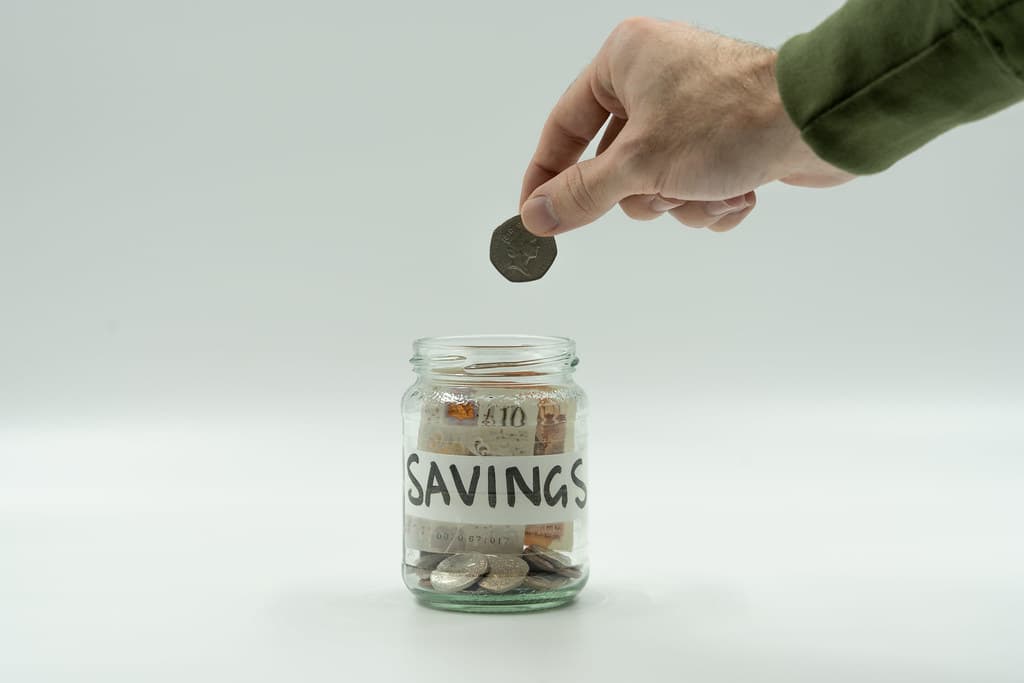
An emergency fund is just money you set aside for surprises, a car repair, a medical bill, a sudden job loss, so you never have to reach for a credit card or a payday loan. This is the single most important thing you can do.
Start with a starter cushion
Do not aim for the whole mountain at once. Aim for a first milestone of about $1,000 (UK around £800, Canada about C$1,300). For many people that one number covers the most common emergencies and brings real peace of mind.
Here is a simple way to get there:
- Open a separate savings account so the money is out of sight (an online "high-yield" savings account often pays more interest).
- Set a small automatic transfer for the day after payday, even $25 a week (£20, C$30).
- Sell a few unused items, a $40 here, a $60 there adds up fast.
- Add any "found" money, a tax refund, a rebate, birthday cash, straight into the fund.
- Celebrate when you cross $1,000, then keep the habit going.
At $25 a week you reach $1,000 in about 40 weeks. Bump it to $50 a week and you are there in 20 weeks.
Then build to 3-6 months of essentials
Once your starter fund is solid, grow it to cover 3 to 6 months of your essential bills, the rent or mortgage, food, utilities, transport and minimum debt payments. Add up only the must-pay items, not the nice-to-haves.
| Monthly essentials | 3-month goal | 6-month goal | |---|---|---| | $2,000 (US) | $6,000 | $12,000 | | £1,600 (UK) | £4,800 | £9,600 | | C$2,600 (Canada) | C$7,800 | C$15,600 |
Real-life example
Maya, a nurse, started with nothing and felt overwhelmed. She set up a $30 weekly auto-transfer and added a $200 tax refund. Eight months later she had $1,240 saved. When her boiler (furnace) died and cost $700 to fix, she paid cash, no credit card, no stress. That single moment, she said, was worth every skipped takeaway.
Step 2: Cut Non-Essential Spending
You do not need to live on beans and water. You just want to trim the spending that does not bring you much joy so you can redirect it toward safety. Start by looking at your last month of bank statements and sorting every payment into "need" or "want."
Easy wins most people find
- Subscriptions you forgot about: the average household quietly pays for 2-3 unused services. Cancelling $15, $9 and $12 saves $36 a month, $432 a year.
- Eating out and coffee: three $6 coffees a week is $72 a month (£58, C$94). Make it at home and keep the treat for Fridays.
- Brand-name groceries: switching to own-label at Walmart or Aldi (US), Tesco, Aldi or Lidl (UK), or No Frills and Superstore (Canada) often cuts a $120 weekly shop to around $90.
- Bank and card fees: a quick phone call can remove monthly account fees of $5-$15.
For a deeper, gentle walkthrough of trimming bills without feeling deprived, see our guide on how to reduce monthly expenses without stress. It pairs well with our honest list of things to stop buying to save money, which helps you spot the small leaks fast.
You can also grab a free spending tracker and budget planner from the free budgeting tools at BudgetCalm to make this step painless.
When to be careful
When you cut spending, do not cancel things that protect you, like necessary insurance or your phone plan you need for job hunting. The goal is to trim waste, not safety. Cut the latte before the lifeline.
Step 3: Protect Your Income (skills, side income)
In a recession, the most valuable asset you have is your ability to earn. Protecting it is about making yourself a little more secure and a little more flexible.
Become harder to let go and easier to rehire
- Add one in-demand skill. Free or low-cost learning (a $15/month course, your library's free classes, YouTube) in areas like spreadsheets, basic data, customer service, or a trade can raise your value.
- Quietly keep your CV (resume) current. Update it every few months so you are never caught flat-footed.
- Nurture your network. A friendly message to a former colleague costs nothing and is how most jobs are actually found.
- Be visible at work. Volunteering for one useful project makes you more memorable when decisions are made.
Start a small side income now
Even $200-$400 a month (£160-£320, C$260-C$520) of extra income gives you breathing room and a backup if your main job changes. Think simple: weekend shifts, tutoring, pet sitting, reselling, or freelance versions of your day-job skill.
Step 4: Pay Down High-Interest Debt
High-interest debt, especially credit cards charging 18-25% a year, is the opposite of an emergency fund. It quietly drains money you will badly want if times get tight. Knocking it down is one of the safest "returns" you can get.
A gentle order of attack
- Keep paying the minimum on every debt so nothing goes into default.
- List your debts with their interest rates.
- Put every spare dollar toward the highest-rate debt first while paying minimums on the rest (this is the "avalanche" method, it saves the most interest).
- When the first debt is gone, roll its payment onto the next one.
- Repeat until the expensive debts are cleared.
A $4,000 card balance at 22% costs you roughly $880 a year in interest alone. Clearing it is like giving yourself an $880 raise. For a kinder, step-by-step plan, read our post on ways to pay off debt faster.
| Debt | Balance | Interest rate | Attack order | |---|---|---|---| | Store card | $1,200 | 27% | 1st | | Credit card | $4,000 | 22% | 2nd | | Car loan | $9,000 | 7% | 3rd |
When to be careful
If money gets tight, never take out a payday loan or a high-cost cash-advance app to cover bills. Those can charge the equivalent of hundreds of percent a year and pull you deeper. Contact the lender to ask for a payment plan first, most have hardship options.
Step 5: Build Multiple Income Streams
Relying on a single paycheck is a bit like a stool with one leg. Adding even small extra "legs" makes you far steadier. You do not need to launch a business; you just need a few modest, reliable trickles.
Beginner-friendly streams to consider
- Selling skills: tutoring, graphic touch-ups, writing, virtual assistance, often $15-$30 an hour.
- Selling stuff: declutter and resell clothes, books, and gadgets; many people make $50-$150 a month.
- Renting what you own: a spare room, a parking space, tools, or camera gear.
- Simple service work: dog walking, cleaning, babysitting, or weekend shifts.
- Tiny passive trickles: interest from that high-yield savings account, or cashback apps that quietly return $10-$30 a month on spending you already do.
The aim is not to fill every hour. It is to make sure that if one stream stops, you are not at zero.
What to Do If You Lose Your Job (stay calm, you have options)
First, breathe. Losing a job is frightening, but it is a situation millions navigate every year, and there is a clear path forward.
Your first-week checklist
- Claim what you are owed. In the US, file for unemployment insurance through your state agency right away. In the UK, apply for Universal Credit and check for New Style Jobseeker's Allowance. In Canada, apply for Employment Insurance (EI) the moment you are let go, do not wait.
- Switch to bare-essentials mode. Pay only for needs, housing, food, utilities, minimum debt, insurance, and pause every want.
- Lean on your emergency fund (this is exactly why you built it) and stretch it as far as possible.
- Call your providers. Lenders, landlords and utility companies often offer hardship plans, reduced payments or short payment holidays if you ask early.
- Tap free support. Food banks, community grants and free debt advice charities exist to help during gaps, using them is smart, not shameful.
- Start the next search gently but steadily, a few quality applications a day beats a frantic hundred.
You are not the only person this has happened to, and it does not define you. Steady, calm action gets you through.
Recession-Proof Spending Habits
These quiet habits, kept up in good times and bad, are what truly recession-proof a life:
- Pay yourself first. Move savings the moment you are paid, before spending.
- Wait 24 hours before any non-essential purchase over $50 (£40, C$65). Most urges fade.
- Cook more than you order in, and keep a small list of cheap, filling meals.
- Buy quality once for items you use daily rather than cheap replacements again and again.
- Keep a one-page budget so you always know your numbers.
- Review subscriptions every 90 days.
- Keep that emergency fund topped up after you use it.
None of these require willpower of steel. They are small, repeatable choices that compound into real security. Start with one step today, the emergency fund, and let the rest follow at your own pace. You have got this.
The BudgetCalm Editorial Team creates beginner-friendly educational guides about everyday money saving, budgeting, frugal living, and simple household financial habits. Our content avoids risky financial advice and focuses on practical, everyday decisions.
Last updated: June 22, 2026
Disclaimer: This content is for educational and informational purposes only and does not constitute financial advice. Always consult a qualified financial professional before making financial decisions.
Related guides
Keep exploring
These internal links help visitors move from one useful page to the next.
Get the free beginner budget checklist
A simple printable checklist to help you track spending, plan bills, and start saving without stress.
No spam. Educational money-saving tips only.