How to Manage Household Budget on One Income USA 2026 (Complete Guide)
Living on one paycheck? This warm, step-by-step guide helps US families budget, save, and build a cushion on a single income in 2026, with real dollar amounts.
By BudgetCalm Editorial Team · Updated June 22, 2026 · Last reviewed June 21, 2026 · 10 min read

If your family is living on one paycheck in 2026, take a deep breath. You are not doing anything wrong, and you are absolutely not alone. Maybe one parent stays home with the kids, maybe a job loss happened, or maybe you simply chose a slower, calmer life. Whatever brought you here, managing a household on a single income is completely doable with a clear plan and a little patience. This guide will walk you through it gently, step by step, with real dollar amounts you can actually use.
One-Income Families in USA 2026 (stats; you're not alone)
It can feel lonely when it seems like everyone around you has two paychecks coming in. But single-income households are far more common than you might think. Millions of American families run on one income, whether by choice or by circumstance. Stay-at-home parents, families caring for an aging Mom or Dad, students supporting a partner, and people between jobs all make this work every single day.
Here is the encouraging truth: a one-income family often spends less in hidden ways than a two-income family. Think about it. When one adult is home, you may save on:
- Childcare (the average daycare bill runs $1,000 to $1,500 per child per month)
- A second car, plus its gas, insurance, and maintenance ($400 to $700 a month)
- Work lunches and coffee ($150 to $300 a month)
- Convenience meals when everyone is too tired to cook ($200+ a month)
So while your income is smaller, your costs can be smaller too. The goal is not to feel deprived. The goal is to build a calm, predictable budget where every dollar has a job. A budget simply means a written plan for your money so you decide where it goes instead of wondering where it went.
The One-Income Budget Reality Check
Before we get into the numbers, let's be honest and kind with ourselves. Living on one income usually means a few trade-offs. You might not be able to say yes to every restaurant invite, every new gadget, or every spontaneous Target run. And that is okay.
A reality check is not about shame. It is about seeing clearly so you can make calm choices. Most one-income families find that success comes down to three habits:
- Spending less than you earn, even if it is only $50 less each month
- Knowing your numbers so surprises do not knock you over
- Protecting yourself with even a small cushion of savings
If money has felt scary or out of control, this plan will help you feel steady again. Let's build it together.
Step 1: Calculate Your Real Take-Home Pay
Your take-home pay (also called net pay) is the money that actually lands in your bank account after taxes, health insurance, and retirement contributions are taken out. This is the number your whole budget is built on, not the bigger "salary" number on a job offer.
How to find your real number
- Grab your last two or three pay stubs.
- Find the net pay line, the amount actually deposited.
- If you are paid every two weeks, multiply that by 26, then divide by 12 to get a true monthly average. (Two months a year you get three paychecks, so simple "times two" math undercounts you.)
- Add any reliable extra income: child support, a small side gig, government benefits like SNAP, or a tax refund spread across the year.
A sample monthly number
Let's say one paycheck brings home $1,650 every two weeks. That is $1,650 x 26 = $42,900 a year, or about $3,575 a month. We will use that figure throughout this guide so you can see the whole plan in action.
If your number is smaller, do not panic. Every step here scales down. For tighter paychecks, our friendly walkthrough on how to budget a small salary breaks it down even further.
Step 2: List ALL Expenses Honestly
Now we write down every dollar that leaves your house. The word all matters here, because the expenses we forget are the ones that wreck the budget. Pull up your bank app and look at the last 60 days.
Sort your spending into two buckets:
- Fixed expenses stay roughly the same every month (rent, car payment, insurance).
- Variable expenses change month to month (groceries, gas, electricity).
Here is a realistic one-income monthly budget for a family of four on that $3,575 take-home pay:
| Expense | Monthly amount | Type | |---|---|---| | Rent or mortgage | $1,200 | Fixed | | Groceries (Aldi/Walmart) | $650 | Variable | | Electric + gas + water | $250 | Variable | | Car payment | $300 | Fixed | | Car insurance | $130 | Fixed | | Gas for the car | $160 | Variable | | Phone | $70 | Fixed | | Internet | $55 | Fixed | | Health costs / copays | $120 | Variable | | Diapers + baby supplies | $80 | Variable | | Debt payments | $150 | Fixed | | Savings | $100 | Fixed | | Everything else (clothes, fun) | $110 | Variable | | Total | $3,375 | |
That leaves about $200 of breathing room. Your numbers will look different, and that is fine. The win is simply seeing it all on one page.
Real-life example
The Ramirez family lives on Dad's $3,575 take-home pay while Mom is home with their two little ones. When they first wrote everything down, they were shocked to find $48 a month in app subscriptions they had forgotten and a $14.99 streaming service nobody had watched since the Fall. Canceling those freed up $63 a month, which they redirected straight into savings. Nothing dramatic, just one honest list.
Step 3: The One-Income Priority Order (Bills > Food > Transport > Debt > Savings)
When money is tight, the order you pay things in protects your family. If a hard month comes, you fund the top of this list first and work down.
- Shelter and core bills. Rent or mortgage, electricity, water, and basic phone come first. A roof and the lights staying on protect everyone.
- Food. Keep your family fed with real groceries from Aldi, Walmart, or Kroger. Health and energy depend on it.
- Transportation. Gas and insurance so the earner can get to work and you can reach the doctor.
- Minimum debt payments. Always pay at least the minimum on every debt to protect your credit and avoid late fees.
- Savings. Even $25 counts. This is what keeps a flat tire from becoming a crisis.
Notice that "fun" money is not on this emergency list. In a normal month you absolutely include small joys. But in a rough month, this order tells you exactly what to protect.
15 Ways One-Income Families Save More
These are gentle, doable swaps. Pick three to start, not all fifteen.
- Meal plan around weekly sales. Building dinners from what is on sale at Kroger can cut a $650 grocery bill to $520, saving roughly $130 a month.
- Shop Aldi and Dollar Tree for pantry staples, snacks, and cleaning supplies.
- Buy generic. Store-brand cereal, medicine, and paper goods save 20% to 40% with no real difference.
- Bulk-buy at Costco for diapers, rice, and toilet paper if you have storage space.
- Cook a big batch on Sunday so tired nights do not turn into $40 takeout.
- Cut the cable cord. A single streaming service at $12 instead of cable at $90 saves $78 a month.
- Lower your phone bill with a budget carrier; many families drop from $140 to $60.
- Adjust the thermostat by a few degrees to trim $20 to $40 off the power bill.
- Cancel forgotten subscriptions. Check your bank app for those sneaky $9.99 charges.
- Use the library for books, movies, and free kids' events instead of paid outings.
- Buy kids' clothes secondhand at thrift stores and Facebook Marketplace.
- Drive less by batching errands into one trip to save gas.
- Raise your insurance deductible if you have an emergency fund, lowering the monthly premium.
- DIY haircuts and simple repairs when you can; even four home haircuts a month saves $80.
- Wait 48 hours before any non-essential purchase over $25. The urge usually passes.
For a deeper, calmer walkthrough of trimming costs, our guide on how to reduce monthly expenses without stress is a warm next read.
Building an Emergency Fund on One Income
An emergency fund is money set aside only for true surprises: a car repair, a medical bill, or a sudden job loss. On one income, this cushion matters even more, because there is no second paycheck to fall back on.
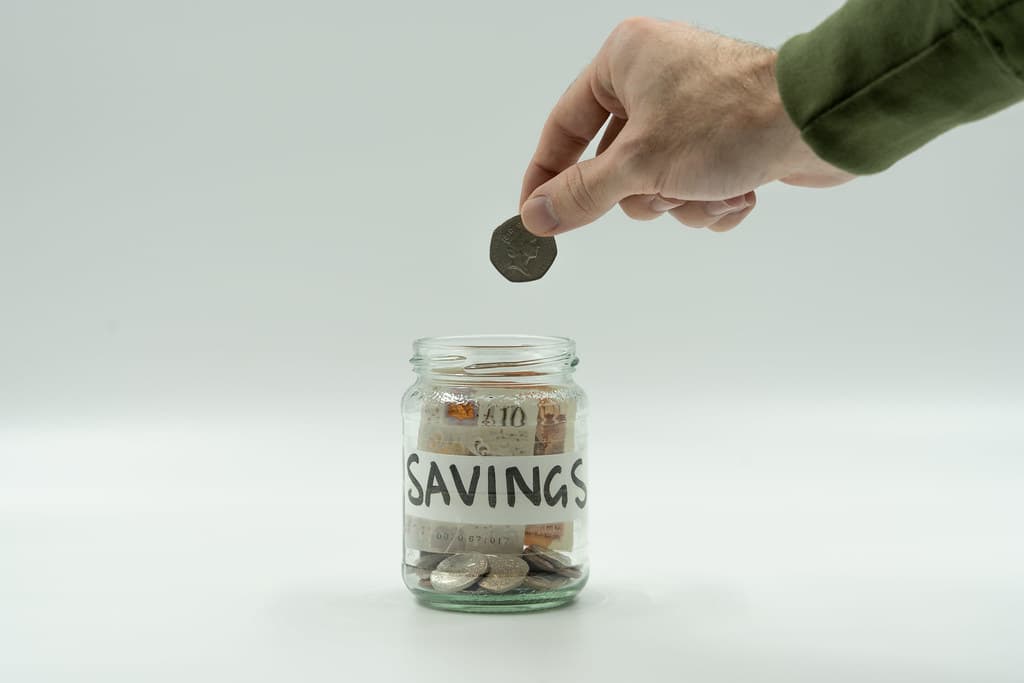
Start tiny. Your first goal is just $500. At $25 a week, you reach it in about 20 weeks. At $100 a month, in five months.
| Milestone | Target | What it covers | |---|---|---| | Starter | $500 | A car repair or a vet bill | | Solid | $1,000 | Most small home emergencies | | Secure | 3 months of bills (~$10,000) | A job loss while you regroup |
Keep this money in a separate savings account so it is not too easy to spend. Automate a small transfer the day after payday so you never see it sitting in checking. Slow and steady absolutely wins here.
When to be careful
Avoid leaning on credit cards as your "emergency fund." With average interest rates well above 20%, a $1,000 charge can balloon fast. A small cash cushion, even $300, keeps you out of that trap.
When to Consider a Part-Time Income
Sometimes the math is simply too tight, and that is not a failure. It may be a sign that a small, flexible income could ease the pressure. The stay-at-home parent might pick up a few hours of remote work, tutoring, pet-sitting, or selling crafts.
Consider part-time income when:
- You have cut what you reasonably can and still come up short each month
- You have no emergency fund and no room to build one
- High-interest debt keeps growing despite minimum payments
Even an extra $200 to $400 a month can be the difference between stress and stability. The goal is breathing room, not burnout. Choose something flexible that fits around your family's rhythm.
Free Resources for Your Family
You do not need fancy paid software to run a one-income household well. A simple notebook or a free spreadsheet works beautifully. To make it easier, you can use the free budgeting tools at BudgetCalm to map out your paycheck, plan your grocery spending, and track your growing emergency fund, all without spending a dime.
If you are brand new to all of this and want a friendly starting template, our beginner monthly budget plan walks you through your very first budget one calm step at a time.
You are doing a hard, loving thing by stretching one income to care for your family. Be patient with yourself, celebrate the small wins, and remember that a calm, written plan turns a scary paycheck into a steady one. You've got this.
The BudgetCalm Editorial Team creates beginner-friendly educational guides about everyday money saving, budgeting, frugal living, and simple household financial habits. Our content avoids risky financial advice and focuses on practical, everyday decisions.
Last updated: June 22, 2026
Disclaimer: This content is for educational and informational purposes only and does not constitute financial advice. Always consult a qualified financial professional before making financial decisions.
Related guides


Keep exploring
These internal links help visitors move from one useful page to the next.
Get the free beginner budget checklist
A simple printable checklist to help you track spending, plan bills, and start saving without stress.
No spam. Educational money-saving tips only.