Back to School on a Budget 2026: Complete USA Family Guide (Save $500)
Back-to-school costs adding up? This warm, step-by-step USA family guide shows you exactly how to save $500 on supplies, clothes, and lunches in 2026.
By BudgetCalm Editorial Team · Updated June 22, 2026 · Last reviewed June 21, 2026 · 9 min read
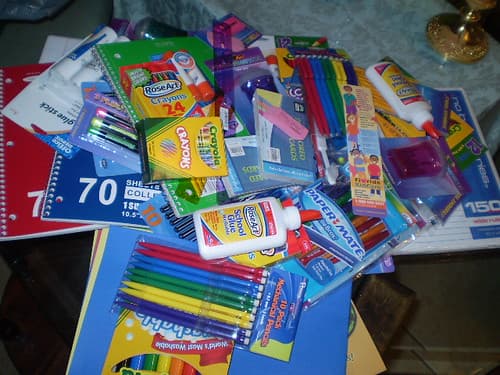
If the words "back to school" make your stomach tighten, you are not alone. Between supplies, new shoes, lunch boxes, and that one very specific brand of folder the teacher insists on, the costs add up fast. Take a deep breath: with a little planning, you can absolutely cover everything your kids need and keep around $500 in your pocket this year. This guide walks you through it step by step, in plain English, with real prices from stores you already shop at.
The True Cost of Back to School USA 2026
Let's start with honest numbers so you know what we're working with. For 2026, a typical American family with two school-age kids spends somewhere between $900 and $1,500 on back-to-school season. Here is roughly where that money goes.
| Category | Typical spend (2 kids) | What it covers | | --- | --- | --- | | School supplies | $140 - $250 | Notebooks, pens, backpacks, folders | | Clothing & shoes | $300 - $500 | Outfits, sneakers, jackets | | Electronics | $150 - $400 | Calculator, headphones, USB drive | | Lunch & snacks (per month) | $120 - $200 | Packed lunches, snacks | | Activity & class fees | $100 - $300 | Sports, art supplies, field trips |
"Back to school" is simply the shopping season from mid-July through early September when families buy what kids need for the new school year. The good news? Almost every line above has room to shrink. By the end of this guide you'll have a plan to cut that total by $500 or more without your kids feeling like they missed out.
Create Your Back to School Budget (Step by Step)
A budget is just a plan for your money before you spend it. It keeps you from grabbing things in the aisle that you didn't actually need. Here is how to build one in about 20 minutes.
Step 1: List what you already have
Before you buy a single thing, "shop your house." Last year's barely-used backpack, half a pack of pencils, leftover glue sticks, and notebooks with blank pages all count. Most families find $30 to $60 of supplies they already own.
Step 2: Get the official school list
Every school sends a supply list. Cross off anything you found in Step 1. Highlight only what you truly need to buy.
Step 3: Set a dollar limit per category
Here is a realistic, money-saving target budget for two kids:
| Category | Budget goal | | --- | --- | | Supplies | $80 | | Clothing & shoes | $220 | | Backpacks/lunchboxes | $0 (reuse) - $40 | | Electronics | $90 | | Activity fees | $120 | | Total | about $550 |
Step 4: Use cash or a separate amount
Set aside the exact dollar amount in cash or in a separate spot in your checking account. When it's gone, you're done. This single habit stops overspending more than any coupon ever will.
If your monthly money already feels tight before school even starts, it's worth reading our guide on how to reduce monthly expenses without stress so the new costs don't knock your whole budget over.
Top 20 Money-Saving Strategies
Here are the specific moves that add up to real savings. Aim to do at least ten of these.
- Shop your house first. Save $30 to $60 by reusing supplies you already own.
- Reuse last year's backpack if it's still sturdy. A new one runs $20 to $50.
- Buy generic, not brand-name supplies. Store-brand crayons at Walmart cost $0.50 versus $1.50 for the famous brand.
- Stock up at Dollar Tree. Folders, glue, erasers, and notebooks are $1.25 each. A full supply run can stay under $20.
- Hit the penny and clearance deals at Target and Walmart in late July when notebooks drop to $0.25.
- Use your state's tax-free weekend. Most states waive sales tax (saving 6% to 9%) on clothes and supplies for one weekend.
- Buy in bulk at Costco or Sam's Club for pencils, paper, and snacks, then split with another family.
- Shop Aldi and Kroger for lunch ingredients instead of pre-packaged snacks.
- Hand down clothes between siblings, cousins, or friends.
- Shop thrift and consignment for jeans and jackets. A $40 jacket often costs $8 used.
- Wait on fall clothes. Buy lightweight clothes now; coats go on sale in October.
- Buy shoes one size up so they last the whole year.
- Skip the character supplies. Plain folders are half the price of licensed ones.
- Pack lunches instead of paying $3 to $4 a day for school lunch. That's a $60 to $80 monthly saving per kid.
- Use cashback apps (more on these below) on everything you do buy.
- Set a price alert and buy electronics during Labor Day sales.
- Join store loyalty programs at Target (Circle) and Walmart for member coupons.
- Buy a year's supply once rather than restocking at full price midyear.
- Coordinate a supply swap with other parents to trade extras.
- Say no to the "first day outfit" pressure. One nice outfit is plenty; the rest can be everyday clothes.
For more everyday grocery and lunch wins, our post on how to save money on groceries pairs perfectly with packing school lunches.
Best Times to Shop (Week-by-Week, July Through September)
Timing is half the savings. Here's a simple calendar.
Mid-to-late July
Stores roll out the first wave of deals. This is the best time for $0.25 notebooks and $0.50 folders. Grab the cheap consumables now.
First two weeks of August
Most state tax-free weekends land here. This is your moment for clothes, shoes, and bigger-ticket items. You save the sales tax plus the sale price.
Late August
Backpacks and lunchboxes hit clearance as the rush dies down. If yours can wait, prices drop 30% to 50%.
Labor Day weekend (early September)
The best electronics deals of the season. Calculators, headphones, and laptops see their lowest prices. Buy now if a teacher requires a graphing calculator (often $90 to $120, but $20 to $40 off on Labor Day).
Mid-to-late September
Fall clothing clearance begins as stores make room for holiday stock. Great for stocking up on the next size up.
Real-life example
Maria has two kids and a $550 budget. She found $45 of supplies at home, spent $18 at Dollar Tree on the rest, used her state's tax-free weekend to buy shoes and clothes for $190 (saving about $15 in tax), reused both backpacks, and bought a graphing calculator on Labor Day for $85. Her total came to $338 — leaving her $212 under budget and over $500 saved compared to the $850 she spent last year.
Apps That Give You Cashback on BTS Shopping
Cashback apps pay you back a small percentage of what you spend. You're going to buy the stuff anyway, so this is free money for a few extra taps.
- Ibotta — Add offers before you shop, then scan your receipt. Back-to-school season often has $0.25 to $2 back on specific items like crayons, paper, and snacks. Many families earn $10 to $25 over the season.
- Rakuten — Best for online shopping. Click through Rakuten to Walmart, Target, or Old Navy and earn 1% to 10% cash back, paid out as a check or PayPal.
- Fetch — The easiest one. Just snap a photo of any receipt and earn points toward gift cards. No pre-selecting offers needed.
A simple way to stack savings
- Buy items on sale during tax-free weekend.
- Activate Ibotta offers on those same items first.
- Scan the receipt into both Ibotta and Fetch.
Stacking like this can return $20 to $40 across the season. Pair these tools with the free budgeting tools at BudgetCalm to track exactly how much you're keeping.
What to Skip (Where Parents Overspend)
These are the quiet budget-killers. Skipping them is often where the biggest savings hide.
- Character/licensed supplies. A licensed folder is $2.50; a plain one is $0.79.
- Premium backpacks. A $70 brand-name backpack does the same job as a $25 one.
- Daily bought school lunch when packing costs half as much.
- Buying a full new wardrobe. Kids grow; you'll be back in stores by winter. Buy what fits now.
- Trendy gadgets the school didn't actually require.
- Extra "just in case" supplies. Buy the list, not the whole aisle.
A great companion read here is our list of things to stop buying to save money — several of them sneak into back-to-school carts.
When to be careful
Watch out for "buy now, pay later" offers at checkout. Splitting a $200 purchase into four payments feels easier, but missed payments can add fees and stress. If you can't pay for it today, it may be a sign to trim the cart instead.
Free Resources for Low-Income Families
If money is genuinely tight this year, please know there is real, no-shame help available. These programs exist precisely for families like yours.
- Free and reduced-price lunch (NSLP). Apply through your school district. Qualifying families pay $0 or about $0.40 per lunch, saving $60 to $80 per child each month.
- School supply drives. Organizations like the Salvation Army, United Way, and local churches give away free backpacks filled with supplies in July and August. Ask your school counselor for a list.
- Operation Backpack and similar nonprofits provide free supplies in many cities.
- Tax-free weekend helps every family, but matters most when every dollar counts.
- Local Buy Nothing groups on Facebook — parents give away gently used clothes, shoes, and supplies for free.
- Your school's front office. Many keep a quiet stash of supplies for any student who needs them. Just ask.
Reaching out for these is smart parenting, not failure. Thousands of families use them every single year.
Your $500 Savings Action Plan
Let's bring it all together into one clear plan.
- This week: Shop your house and list what you already have. (Saves $40)
- Cross off found items from the school supply list.
- Set your category budget using the table above (around $550 total).
- Mid-July: Buy cheap consumables at Dollar Tree and Walmart clearance. (Saves $50)
- Reuse backpacks and lunchboxes. (Saves $60)
- Tax-free weekend: Buy clothes and shoes. (Saves $40 to $60)
- Install Ibotta, Rakuten, and Fetch and stack offers. (Saves $25)
- Pack lunches instead of buying them. (Saves $70 per child monthly)
- Labor Day: Buy any required electronics. (Saves $30)
- Skip licensed supplies and the "full wardrobe." (Saves $80)
Add those up and you're comfortably past $500 in savings — without your kids feeling left out. You've got this. A calm, planned back-to-school season is absolutely within reach, and next year it'll feel even easier.
Get the free beginner budget checklist
A simple printable checklist to help you track spending, plan bills, and start saving without stress.
No spam. Educational money-saving tips only.
The BudgetCalm Editorial Team creates beginner-friendly educational guides about everyday money saving, budgeting, frugal living, and simple household financial habits. Our content avoids risky financial advice and focuses on practical, everyday decisions.
Last updated: June 22, 2026
Disclaimer: This content is for educational and informational purposes only and does not constitute financial advice. Always consult a qualified financial professional before making financial decisions.
Related guides
Keep exploring
These internal links help visitors move from one useful page to the next.
Get the free beginner budget checklist
A simple printable checklist to help you track spending, plan bills, and start saving without stress.
No spam. Educational money-saving tips only.