The $1 Savings Challenge 2026: Save $1,000 With Just $1 Per Day
Saving $1,000 feels impossible until you start with just $1 a day. This gentle, beginner-friendly challenge builds the habit first so your savings grow almost on their own.
By BudgetCalm Editorial Team · Updated June 22, 2026 · Last reviewed June 21, 2026 · 10 min read
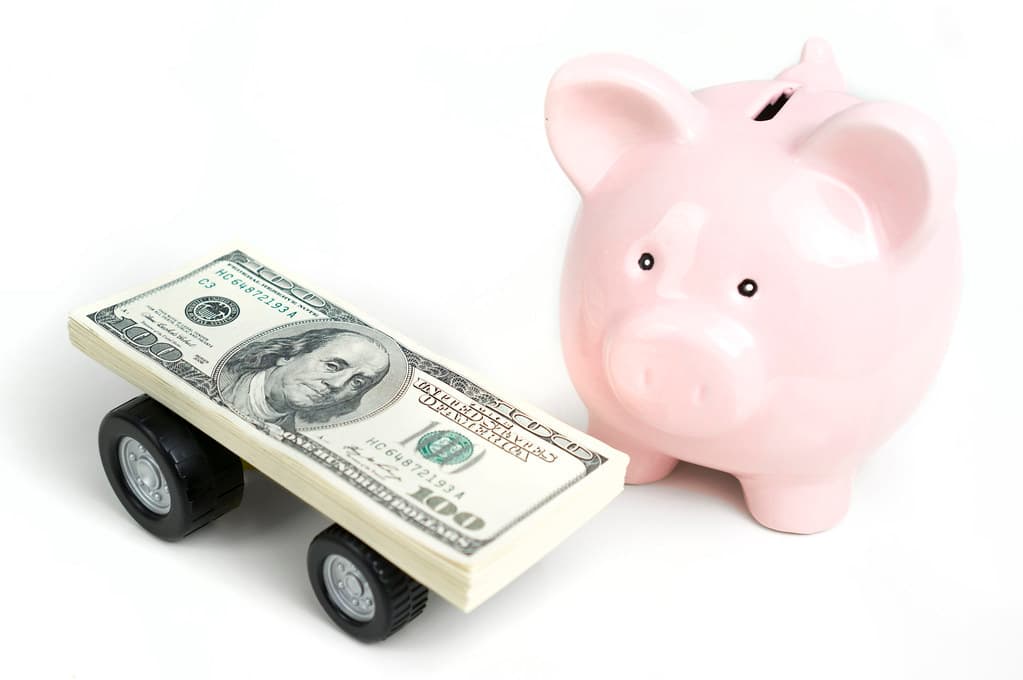
If you have ever looked at a savings goal like $1,000 and felt your stomach sink, this challenge is for you. Saving money does not have to mean giving up everything you love or moving huge chunks of cash you do not have. The $1 savings challenge starts with the smallest amount you can imagine, just one dollar a day, and quietly grows into something that genuinely changes your year. Let's walk through it together, one easy step at a time.
Why $1/Day Is the Perfect Start
Most savings plans fail for one simple reason: they ask too much of you too soon. When a plan tells a beginner to save $200 a month right away, it feels impossible, you skip a month, and then you quit entirely. A dollar a day removes that pressure completely.
Here is the magic of starting small:
- $1 is invisible. It is less than a coffee at Walmart, less than a single soda at the gas station, less than a candy bar at the Dollar Tree. You will barely notice it leaving your wallet.
- It builds the habit first, the balance second. Saving is a skill, like brushing your teeth. The goal in the beginning is not the money, it is teaching your brain that "I am someone who saves."
- Small wins keep you going. Putting away $1 today and seeing the balance tick up gives you a little hit of pride. That feeling is what carries you to day 100.
Here is a quick term to know: compound habit simply means a small action you repeat so often it becomes automatic, and over time it stacks up into a big result. That is exactly what we are building.
The math that surprises everyone
A single dollar feels like nothing, but look at how it adds up over a full year:
| Time period | At $1/day | At $2/day | At $3/day | |-------------|-----------|-----------|-----------| | 1 week | $7 | $14 | $21 | | 1 month | $30 | $60 | $90 | | 6 months | $182 | $364 | $546 | | 1 year | $365 | $730 | $1,095 |
At a flat dollar a day, you reach $365 in a year without trying hard. Bump it up just slightly as you grow more comfortable, and $1,000 is well within reach. We will show you exactly how to get there.
How the $1 Challenge Actually Works (three variations explained)
There is no single "right" way to do this. Pick the version that fits your life and your budget. You can always switch later.
Variation 1: The Flat Dollar (easiest)
Every single day, you move $1 into savings. That is it. No math, no thinking.
- Daily amount: $1
- Yearly total: $365
- Best for: Total beginners, tight budgets, anyone who wants zero stress.
Variation 2: The Slow Climb (most popular)
You start at $1 a day, and every month you add one more dollar to your daily amount. Month 1 is $1/day, month 2 is $2/day, and so on.
- Daily amount: grows $1 each month
- Yearly total: roughly $710 by the end of the year
- Best for: People who want to feel their progress speed up as their confidence grows.
Variation 3: The $1,000 Stretch (most ambitious)
You aim for the full $1,000 in a year, which works out to about $2.75 a day, or roughly $19 a week. You can save it daily or in one weekly transfer.
- Daily amount: about $2.75 (or $19/week)
- Yearly total: $1,000+
- Best for: Anyone with a clear goal, like an emergency cushion or holiday fund.
If the Slow Climb or the Stretch feels like a lot, remember you can always begin with the Flat Dollar and graduate later. There is no failing here. For a slightly bigger version of this same idea, the $5 savings challenge walks you through saving even faster once you are ready.
Week 1: Building the Habit
The first seven days are not about the money at all. They are about proving to yourself that you can do this. Treat week one as a gentle warm-up.
Follow these steps to get started:
- Pick your spot. Decide where the dollar goes. A jar on the counter, a separate savings account, or a round-up app all work. We cover the best options below.
- Choose a daily trigger. Link saving to something you already do, like making your morning coffee or locking the front door at night. This is the easiest way to remember.
- Move your first $1 today. Do not wait for Monday or the first of the month. Do it right now, even if it is just a physical dollar in a jar.
- Mark it down. Use a free tracker, a notes app, or a simple paper chart. Crossing off each day feels genuinely satisfying.
- Celebrate day 7. When you hit one full week and $7, pause and notice it. You just did something most people never start.
Real-life example
Maria, a busy Mom of two in Ohio, started by dropping a $1 bill into an old coffee can every night after the kids went to bed. By the end of week one she had $7 and, in her words, "felt weirdly proud of a coffee can." That tiny pride is what kept her going. Six months later that same can, plus a few auto-transfers, held over $200.
If you stumble and miss a day, do not throw in the towel. Just drop in $2 the next day to catch up. Missing a day is normal; quitting is the only real mistake.
Month 2-6: Growing Momentum
By now the daily dollar should feel like second nature. This is the stretch where your balance starts to look real, and where a little momentum makes everything easier.
Find painless extra dollars
You do not need a raise to speed things up. Look for "found money" you can redirect:
- Skip one drive-thru coffee a week: saves about $5, which is five days of saving in one move.
- Bring lunch from home twice a week: the difference between a $12 takeout lunch and a $3 sandwich made from Aldi or Kroger groceries adds up fast.
- Cancel one streaming service you forgot about: that is often $10 to $15 a month going straight to savings.
- Use store brands at Target or Walmart: swapping name brands for store brands on a few staples can free up $20 to $40 a month.
Track your milestones
Watching numbers grow is hugely motivating. Here is a rough picture of where the Slow Climb variation lands you:
| Month | Daily amount | Running total | |-------|-------------|---------------| | Month 2 | $2 | about $90 | | Month 3 | $3 | about $180 | | Month 4 | $4 | about $300 | | Month 5 | $5 | about $450 | | Month 6 | $6 | about $630 |
Crossing the halfway mark around month six is a real turning point. If you want a structured weekly version of this momentum-building, the 52-week money challenge is a wonderful companion that gets you to $1,378.
Month 7-12: Reaching $1,000
The back half of the year is where it all pays off. Your habit is locked in, and your balance is doing the heavy lifting for you.
Push to the finish line
In these final months, consider giving your savings small "boosts" from money that arrives unexpectedly:
- Tax refund: even setting aside $100 of a refund can leap you forward weeks.
- Birthday or holiday cash: funneling half of any gift money keeps your fun and your goal balanced.
- Cash-back rewards: redeem credit card or app cash-back straight into the savings pot.
- A quick sell-off: listing a few unused items can easily bring in $30 to $80.
Stay consistent through the holidays
The toughest stretch is usually November and December, when spending spikes. Protect your habit by keeping the daily dollar going no matter what, even if you cannot add extra boosts. Consistency beats intensity every time. By month twelve, the Stretch variation gets you to a full $1,000, and even the gentler versions leave you with a savings cushion you did not have a year ago. If you ever want to see how a focused short sprint compares, the save $1,000 in 30 days challenge shows the intense version of the same goal.
Where to Stash Your $1/Day
Where you keep the money matters more than people think. The right spot keeps your savings safe from impulse spending and might even pay you a little extra.
- A separate savings account: Open a free account that is not linked to your debit card. The slight inconvenience of transferring money out is a feature, not a bug, because it stops you spending it on a whim.
- A high-yield savings account (HYSA): This is just a savings account that pays more interest than a regular one. A high-yield savings account can pay meaningfully more than a standard bank account, so your money grows a tiny bit on its own while it sits there. It is a low-effort bonus.
- A physical jar or envelope: If you are very much a hands-on, see-it-to-believe-it person, a jar works beautifully for the habit. Just deposit it into a real account every couple of weeks so it stays safe.
When to be careful
Avoid keeping your challenge money in your everyday checking account. When savings and spending money sit in the same place, that $300 you worked hard to build can vanish on a single grocery run without you even noticing. Keep it separate.
To keep yourself on track and see your progress at a glance, you can use a simple tracker from the free budgeting tools at BudgetCalm and watch every dollar add up.
Making It Automatic (round-up apps, auto-transfer)
The single best thing you can do for this challenge is to remove yourself from the equation. If saving happens without you remembering, you cannot forget.
Round-up apps
Round-up apps connect to your debit or credit card and round every purchase up to the nearest dollar, saving the difference. If you spend $4.30 at the gas station, $0.70 quietly moves to savings.
- A typical shopper rounds up $0.50 to $0.60 per purchase.
- Across 30 to 40 purchases a month, that is roughly $15 to $25 saved without lifting a finger.
- Stacked on top of your daily dollar, round-ups can quietly double your pace.
Automatic transfers
Even simpler, set your bank to move a fixed amount on a schedule:
- $1 every day, timed for the morning after payday clears, or
- $7 every week, or
- $19 every week if you are chasing the full $1,000.
Automating turns a daily decision into a one-time setup. You decide once, and the saving keeps happening on its own. This is how busy people reach big goals without willpower running out.
What $1,000 Can Do For You
It is worth picturing the finish line, because $1,000 is genuinely life-changing for many beginners. This is your money, built one dollar at a time.
Here is what that grows into:
- A starter emergency fund. Most surprise expenses, a car repair, a medical copay, a busted water heater, fall under $1,000. Having this cushion means the next emergency is an inconvenience, not a crisis.
- Breathing room from debt. With cash on hand, you stop reaching for a credit card every time life happens, which keeps you from sliding deeper.
- A real holiday or vacation, paid in cash. Imagine a debt-free Christmas, fully funded by a dollar a day.
- Proof you can do hard things. This might be the most valuable part. Finishing this challenge rewires how you see yourself with money, and that confidence carries into everything you do next.
You do not need to be rich, disciplined, or good at math to start. You just need one dollar and the willingness to do it again tomorrow. That is it. Start your jar or your transfer today, and a year from now you will be so glad you did.
The BudgetCalm Editorial Team creates beginner-friendly educational guides about everyday money saving, budgeting, frugal living, and simple household financial habits. Our content avoids risky financial advice and focuses on practical, everyday decisions.
Last updated: June 22, 2026
Disclaimer: This content is for educational and informational purposes only and does not constitute financial advice. Always consult a qualified financial professional before making financial decisions.
Related guides

Keep exploring
These internal links help visitors move from one useful page to the next.
Get the free beginner budget checklist
A simple printable checklist to help you track spending, plan bills, and start saving without stress.
No spam. Educational money-saving tips only.